BLUETOOTH HISTORY
Bluetooth is a proprietary open wireless technology standard for exchanging data over short distances (using short-wavelength radio transmissions in the ISM band from 2400–2480 MHz) from fixed and mobile devices, creating personal area networks (PANs) with high levels of security. Created by telecoms vendor Ericsson in 1994, it was originally conceived as a wireless alternative to RS-232 data cables. It can connect several devices, overcoming problems of synchronization.Bluetooth is managed by the Bluetooth Special Interest Group, which has more than 15,000 member companies in the areas of telecommunication, computing, networking, and consumer electronics. The SIG oversees the development of the specification, manages the qualification program, and protects the trademarks. To be marketed as a Bluetooth device, it must be qualified to standards defined by the SIG. A network of patents is required to implement the technology and are only licensed to those qualifying devices; thus the protocol, whilst open, may be regarded as proprietary.
Implementation
Bluetooth uses a radio technology called frequency-hopping spread spectrum, which chops up the data being sent and transmits chunks of it on up to 79 bands (1 MHz each; centered from 2402 to 2480 MHz) in the range 2,400–2,483.5 MHz (allowing for guard bands). This range is in the globally unlicensed Industrial, Scientific and Medical (ISM) 2.4 GHz short-range radio frequency band. It usually performs 800 hops per second, with AFH enabled.Originally Gaussian frequency-shift keying (GFSK) modulation was the only modulation scheme available; subsequently, since the introduction of Bluetooth 2.0+EDR, π/4-DQPSK and 8DPSK modulation may also be used between compatible devices. Devices functioning with GFSK are said to be operating in basic rate (BR) mode where an instantaneous data rate of 1 Mbit/s is possible. The term Enhanced Data Rate (EDR) is used to describe π/4-DPSK and 8DPSK schemes, each giving 2 and 3 Mbit/s respectively. The combination of these (BR and EDR) modes in Bluetooth radio technology is classified as a "BR/EDR radio".
Bluetooth is a packet-based protocol with a master-slave structure. One master may communicate with up to 7 slaves in a piconet; all devices share the master's clock. Packet exchange is based on the basic clock, defined by the master, which ticks at 312.5 µs intervals. Two clock ticks make up a slot of 625 µs; two slots make up a slot pair of 1250 µs. In the simple case of single-slot packets the master transmits in even slots and receives in odd slots; the slave, conversely, receives in even slots and transmits in odd slots. Packets may be 1, 3 or 5 slots long but in all cases the master transmit will begin in even slots and the slave transmit in odd slots.
Bluetooth provides a secure way to connect and exchange information between devices such as faxes, mobile phones, telephones, laptops, personal computers, printers, Global Positioning System (GPS) receivers, digital cameras, and video game consoles.
Communication and connection
A master Bluetooth device can communicate with a maximum of seven devices in a piconet (an ad-hoc computer network using Bluetooth technology), though not all devices support this limit. The devices can switch roles, by agreement, and the slave can become the master (for example, a headset initiating a connection to a phone will necessarily begin as master, as initiator of the connection; but may subsequently prefer to be slave).The Bluetooth Core Specification provides for the connection of two or more piconets to form a scatternet, in which certain devices simultaneously play the master role in one piconet and the slave role in another.
At any given time, data can be transferred between the master and one other device (except for the little-used broadcast mode). The master chooses which slave device to address; typically, it switches rapidly from one device to another in a round-robin fashion. Since it is the master that chooses which slave to address, whereas a slave is (in theory) supposed to listen in each receive slot, being a master is a lighter burden than being a slave. Being a master of seven slaves is possible; being a slave of more than one master is difficult. The specification is vague as to required behaviour in scatternets.
Many USB Bluetooth adapters or "dongles" are available, some of which also include an IrDA adapter. Older (pre-2003) Bluetooth dongles, however, have limited capabilities, offering only the Bluetooth Enumerator and a less-powerful Bluetooth Radio incarnation. Such devices can link computers with Bluetooth with a distance of 100 meters, but they do not offer as many services as modern adapters do.
Uses
Bluetooth is a standard wire-replacement communications protocol primarily designed for low power consumption, with a short range (power-class-dependent, but effective ranges vary in practice; see table below) based on low-cost transceiver microchips in each device. Because the devices use a radio (broadcast) communications system, they do not have to be in visual line of sight of each other, however a quasi optical wireless path must be viable.| Class | Maximum permitted power | Range (m) |
|
|---|---|---|---|
| (mW) | (dBm) | ||
| Class 1 | 100 | 20 | ~100 |
| Class 2 | 2.5 | 4 | ~10 |
| Class 3 | 1 | 0 | ~5 |
| Version | Data rate | Maximum application throughput |
|---|---|---|
| Version 1.2 | 1 Mbit/s | 0.7 Mbit/s |
| Version 2.0 + EDR | 3 Mbit/s | 2.1 Mbit/s |
| Version 3.0 + HS | See Version 3.0+HS. | |
| Version 4.0 | See Version 4.0LE. | |
Bluetooth profiles
Main article: Bluetooth profile
To use Bluetooth wireless technology, a device has to be able to
interpret certain Bluetooth profiles, which are definitions of possible
applications and specify general behaviors that Bluetooth enabled
devices use to communicate with other Bluetooth devices. These profiles
include settings to parametrize and to control the communication from
start. Adherence to profiles saves the time for transmitting the
parameters anew before the bi-directional link becomes effective. There
are a wide range of Bluetooth profiles that describe many different
types of applications or use cases for devicesList of applications
 |
| Add caption |
- Wireless control of and communication between a mobile phone and a handsfree headset. This was one of the earliest applications to become popular.
- Wireless control of and communication between a mobile phone and a Bluetooth compatible car stereo system
- Wireless Bluetooth headset and Intercom.
- Wireless networking between PCs in a confined space and where little bandwidth is required.
- Wireless communication with PC input and output devices, the most common being the mouse, keyboard and printer.
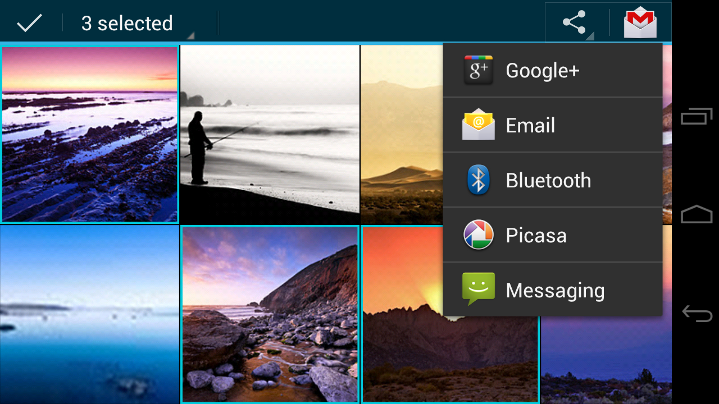
- Transfer of files, contact details, calendar appointments, and reminders between devices with OBEX.
- Replacement of previous wired RS-232 serial communications in test equipment, GPS receivers, medical equipment, bar code scanners, and traffic control devices.
- For controls where infrared was often used.
- For low bandwidth applications where higher USB bandwidth is not required and cable-free connection desired.
- Sending small advertisements from Bluetooth-enabled advertising hoardings to other, discoverable, Bluetooth devices.
- Wireless bridge between two Industrial Ethernet (e.g., PROFINET) networks.
- Three seventh-generation game consoles, Nintendo's Wiiand Sony's PlayStation 3 and PSP Go, use Bluetooth for their respective wireless controllers.
- Dial-up internet access on personal computers or PDAs using a data-capable mobile phone as a wireless modem.
- Short range transmission of health sensor data from medical devices to mobile phone, set-top box or dedicated telehealth devices.
- Allowing a DECT phone to ring and answer calls on behalf of a nearby cell phone
- Real-time location systems (RTLS), are used to track and identify the location of objects in real-time using “Nodes” or “tags” attached to, or embedded in the objects tracked, and “Readers” that receive and process the wireless signals from these tags to determine their locations
- Personal security application on mobile phones for prevention of theft or loss of items. The protected item has a Bluetooth marker (e.g. a tag) that is in constant communication with the phone. If the connection is broken (the marker is out of range of the phone) then an alarm is raised. This can also be used as a man overboard alarm. A product using this technology has been available since 2009.
Bluetooth vs. Wi-Fi (IEEE 802.11)
Bluetooth and Wi-Fi (the brand name for products using IEEE 802.11 standards) have some similar applications: setting up networks, printing, or transferring files. Wi-Fi is intended as a replacement for cabling for general local area network access in work areas. This category of applications is sometimes called wireless local area networks (WLAN). Bluetooth was intended for portable equipment and its applications. The category of applications is outlined as the wireless personal area network (WPAN). Bluetooth is a replacement for cabling in a variety of personally carried applications in any setting and can also support fixed location applications such as smart energy functionality in the home (thermostats, etc.).Wi-Fi is a wireless version of a common wired Ethernet network, and requires configuration to set up shared resources, transmit files, and to set up audio links (for example, headsets and hands-free devices). Wi-Fi uses the same radio frequencies as Bluetooth, but with higher power, resulting in higher bit rates and better range from the base station. The nearest equivalents in Bluetooth are the DUN profile, which allows devices to act as modem interfaces, and the PAN profile, which allows for ad-hoc networking.
Devices
 |
| Add caption |